Reviewing Eat Sleep Fix Cars Repeat for Embroidery
As a designer who has spent years digitizing and stitching thousands of projects, I have learned that a graphic’s appeal on a screen does not always translate to thread on fabric. When I first encountered the Eat Sleep Fix Cars Repeat Automobile design, my initial reaction was one of cautious optimism. It is marketed primarily as a funny t-shirt design by “Creative T-shirt Designer,” but my job is to look past the digital mockup and evaluate its viability as a machine embroidery design for real-world applications. For Etsy sellers, craft business owners, and hobbyists, understanding this distinction is crucial before committing hoop time and expensive thread.
First Impressions and Visual Personality
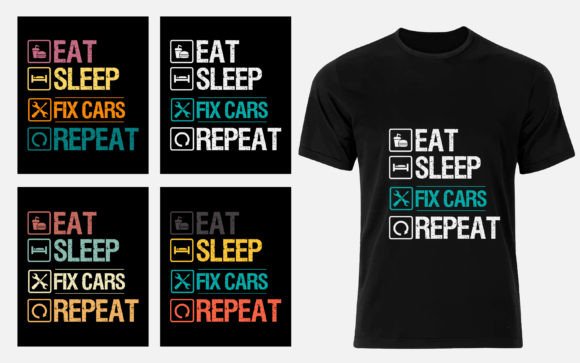
The theme is immediately recognizable: it targets the automotive enthusiast, the mechanic, or the weekend garage warrior. The layout relies on a rhythmic repetition of actions, creating a sense of routine and passion. Visually, the design carries a bold, masculine energy. In the context of Graphics and T-Shirt Designs, this works well because high-contrast, simple shapes read clearly from a distance. However, when we transition to embroidery, we must consider how these shapes hold up under the needle.
The mood is playful yet grounded. It is not overly intricate, which is often a blessing in embroidery. Complex gradients and tiny details frequently get lost in stitch density, but this design appears to rely on strong silhouettes. This suggests it could perform well across various mediums, provided the digitization respects the limitations of thread. The visual personality is straightforward, making it an excellent candidate for personalized gifts where the recipient’s identity is tied to their hobby.
Real-World Application Scenarios
To truly test the value of this asset, I imagined several production scenarios. The most obvious application is custom apparel. A heavy-weight cotton sweatshirt or a durable work shirt provides the perfect canvas. The design’s humor resonates with customers looking for custom apparel that speaks to their daily grind. Imagine stitching this onto a navy blue hoodie for a local auto shop owner; the contrast would be striking, and the message would reinforce their brand identity.
Beyond clothing, I considered home goods. A tote bag design featuring this motif could be a hit at craft fairs. Canvas totes handle fill stitches well, and the rectangular nature of many embroidery hoops accommodates horizontal layouts efficiently. Similarly, an embroidered patch applied to a denim jacket or a tool bag adds a layer of professionalism and personal flair. Patches are forgiving regarding fabric texture, allowing the design to shine without worrying about puckering on stretchy materials.
For those running a small shop product line, this design could also work on aprons. Mechanics and DIY enthusiasts often wear aprons to protect their clothes, and adding a humorous, relevant graphic increases the perceived value of the handmade product. It transforms a utility item into a statement piece.
Technical Considerations for Stitching
While the concept is strong, the execution requires careful planning. If you are using this as a digital embroidery file, you must inspect the stitch types. Large areas of text or solid shapes likely utilize fill stitch, which can be dense. On thin fabric, such as a standard t-shirt, this density might cause pulling or distortion. I strongly recommend using a cut-away stabilizer for garments that will be washed frequently, as it provides superior support compared to tear-away options.
Curved surfaces present another challenge. If you plan to stitch this on a cap, you must ensure the design fits within the curved hoop area without distorting the lettering. Caps require precise hooping and often benefit from a stiffer backing. Additionally, check the stitch density. If the design is too dense, it may become stiff and uncomfortable to wear. A well-digitized file will balance satin stitch for outlines and lighter fill patterns for larger areas to maintain flexibility.
Thread color choice is critical. Since the design is automotive-themed, traditional colors like red, black, white, and metallic silver work best. However, always test your thread colors on scrap fabric first. What looks vibrant on a monitor may appear muted or clashing on specific fabric textures. For dark fabrics, ensure you have enough contrast; a dark grey thread on a black sweatshirt will disappear, ruining the visual impact.
Commercial Viability and Brand Consistency
For the Etsy seller or creative entrepreneur, consistency is key. This design fits neatly into a niche market. It is not a generic floral pattern; it targets a specific demographic. This specificity can drive higher engagement and buyer trust because customers feel the product was made for them. When used in printable mockups or digital product previews, ensure the representation is accurate. Misleading images can lead to returns and negative reviews.
From a commercial embroidery standpoint, speed matters. A design that stitches out quickly without excessive thread breaks is more profitable. While I cannot confirm the exact stitch count or machine compatibility from the provided description, experienced designers know to check these specs before purchasing. Verify if the file includes multiple formats compatible with your specific machine brand. Also, confirm the licensing terms. Since this product is provided by “Creative T-shirt Designer,” you must visit their Creative Fabrice store to ensure you have the right to use the design for commercial purposes, such as selling finished items.
Practical Designer Notes
- Test on Scrap Fabric: Never stitch a new design directly on your final product. Use similar weight and texture fabric to check for puckering or registration issues.
- Check Stabilizer Compatibility: Match your stabilizer to the fabric. Use cut-away for knits and stretchy fabrics, and tear-away for stable wovens.
- Inspect Small Details: Zoom in on the digital file. Are there tiny elements that might not stitch out cleanly? Simplify if necessary.
- Contrast Testing: View the design in black and white to ensure the shapes are distinct and readable without color reliance.
- Verify Licensing: Before listing any finished product on Etsy or at a craft fair, confirm that the license allows for commercial use of the digital embroidery file.
In conclusion, Eat Sleep Fix Cars Repeat Automobile offers a solid foundation for a variety of embroidery projects. Its strength lies in its clear theme and broad appeal to automotive enthusiasts. However, its success depends entirely on the quality of the digitization and the skill of the operator. By paying attention to fabric choice, stabilizer selection, and thread contrast, you can transform this graphic into a high-quality, professional finished product. Whether you are creating a holiday gift for a car-loving dad or stocking your boutique with unique custom apparel, this design has potential—if handled with the precision it deserves.