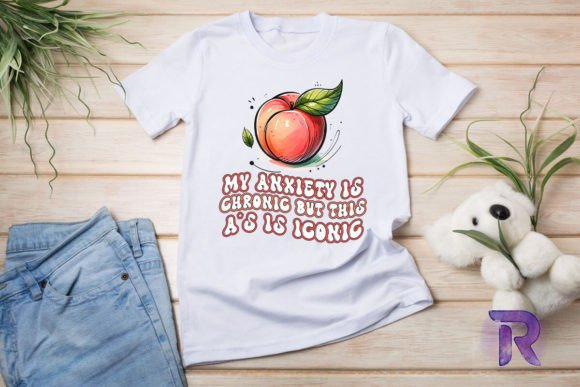
Mental Health Anxiety Funny Sublimation: A Designer’s Take
As an embroidery designer who has spent years digitizing patterns and reviewing assets for small business owners, I approach every new file with a critical eye. We are not just looking for pretty pictures; we are looking for viability. Can this design survive the needle? Will it hold up on a sweatshirt after ten washes? Does it communicate the right message to the customer? When I first encountered Mental Health Anxiety Funny Sublimation, my initial reaction was one of cautious curiosity. The intersection of mental health awareness and humor is a delicate balance, and translating that into a physical product requires both sensitivity and technical precision.
First Impressions and Visual Personality
The mood of this design is immediately disarming. It takes a heavy topic—anxiety—and wraps it in a layer of approachable, self-deprecating humor. For an embroidery project, this is gold. Customers are increasingly drawn to products that feel authentic and relatable. The layout appears clean, which is essential when moving from a digital screen to thread. However, as a reviewer, I must note that the product description highlights its strength in sublimation, printables, and iron-on transfers. This suggests the original artwork is likely high-resolution raster or vector graphics rather than a pre-digitized stitch file.
For those of us in the craft business, this distinction is vital. If you are an Etsy seller or a boutique owner looking to create a handmade product, you cannot simply load a sublimation graphic into your embroidery machine. You must either digitize it yourself or commission a professional to convert these Graphics into a functional machine embroidery design. The visual personality here is bold and statement-driven, making it ideal for T-Shirt Designs where clarity is key.
Real-World Application: The Custom Sweatshirt Test
Let’s imagine a real-life scenario. A client approaches you for a custom apparel order. They want a cozy, oversized sweatshirt that acknowledges their anxiety but does so with a wink. This is where Mental Health Anxiety Funny Sublimation shines as a concept. If you are using this as a sublimation transfer, the process is straightforward: print, press, and peel. The colors will be vibrant, and the detail will be crisp because sublimation dyes the fabric fibers directly.
However, if you intend to embroider this design, the execution changes dramatically. Embroidery adds texture and weight. On a thick fleece sweatshirt, a well-digitized version of this design would look premium. The raised threads add a tactile element that sublimation lacks. But you must consider the stitch types. Large areas of color might require a fill stitch, which can become dense and stiff. To maintain the "funny" and lighthearted vibe, the stitching should not feel like a heavy armor plate on the chest. I would recommend using a combination of satin stitch for borders and lighter fill patterns for larger shapes to keep the fabric draping naturally.
Navigating Fabric and Hoop Constraints
One of the biggest challenges with humorous text-based or detailed graphic designs is scale. If you are creating an embroidered patch or a small item like a baby embroidery piece, you must be wary of tiny lettering. Small details get lost in thread. If the original graphic has fine lines or small text, they may need to be simplified during the digitizing process. Always test the design on scrap fabric first. Check how the thread colors contrast against the fabric texture. A dark navy hoodie will swallow up dark thread colors, so you may need to adjust your palette for visibility.
Curved surfaces, such as caps or tote bag designs, present another hurdle. A large, flat graphic does not wrap well around a curved crown of a hat. In these cases, consider breaking the design into smaller elements or using an applique design technique. Applique allows you to use actual fabric pieces to cover large areas, reducing stitch density and preventing the garment from puckering. This is especially important for stretchy fabrics or thin materials like kitchen towels or aprons, where excessive stitching can distort the weave.
Commercial Viability and Brand Consistency
For commercial embroidery projects, consistency is everything. If you are building a brand around mental health awareness, your finished product must look professional. A poorly digitized file with loose threads or uneven tension undermines the message. Buyers engage with products that feel high-quality. When you use Mental Health Anxiety Funny Sublimation as the basis for your work, ensure that the final output aligns with your brand’s standards. Whether it is a holiday embroidery gift or a year-round staple in your small shop product line, the craftsmanship speaks louder than the slogan.
It is also crucial to verify licensing. The description mentions these are versatile digital files perfect for various decor and printables. Before selling finished items or digital embroidery files derived from this artwork, confirm the license terms. Many graphic assets allow for personal use but require an extended license for commercial resale. Protecting your craft business means respecting intellectual property rights just as much as mastering your hoop size and stabilizer choices.
Practical Notes for the Maker
Before you commit to a full production run, take these practical steps:
- Digitize with Care: If converting from graphic to stitch, pay attention to stitch direction. Follow the contours of the design to enhance its shape.
- Stabilizer Selection: Use a cut-away stabilizer for knit fabrics like t-shirts and sweatshirts to provide lasting support. For woven fabrics like tote bags, a tear-away might suffice, but test first.
- Thread Choice: Polyester thread offers durability and sheen, making it ideal for items that will be washed frequently. Cotton gives a matte, vintage look but may fade faster.
- Mockup Testing: Create printable mockups to see how the design looks in black and white. If it loses definition in grayscale, it may lack the contrast needed for clear embroidery.
In conclusion, Mental Health Anxiety Funny Sublimation offers a compelling starting point for creators. It taps into a relevant cultural conversation with humor and heart. Whether you choose to sublimate it onto a mug or digitize it for a custom apparel line, the success lies in the execution. Treat the design with respect, understand the limitations of your medium, and always prioritize the quality of the finished product. Your customers are not just buying a design; they are buying a piece of art that speaks to their experience. Make sure it speaks clearly.